Plumbing - Water Heater
Water Heater
Although it may seem daunting, replacing your water heater is not much more complicated than replacing a garbage disposal or kitchen faucet. Even if you decide to upgrade your unit, or go to an entirely new technology, the plumbing is still relatively simple and doable. You should keep in mind that the modern equivalent of your existing water heater may be a very different size; always measure before swapping a water heater out and before shopping for a new one.
The best long-term value for your money can be found in an Energy Star-rated unit. Because the water heater runs so much in any home, a little energy cost savings over the long haul will add up to more than the higher cost when you buy the unit. And think to the future when you're shopping. You can now choose from among “smart” water heaters that can be connected and controlled via Wi-Fi and your smartphone or home control console. You can also consider the energy-conserving option of a tankless unit, which offers greater longevity.
Expect a water heater to last around 8 to 12 years. The longevity depends on many factors, including quality, levels, maintenance, and other factors, such as water hardness. The best time to replace a water heater is before it leaks and fills your basement with water. It's a bit of a gamble, but once your old heater starts showing signs of wear and perhaps even acting up a bit, go ahead and make the change.
Water heaters for primary duty in residences range in size from 30 gallons to 65 gallons. For a family of four, a 40- or 50-gallon model should be adequate. While you don't want to run out of hot water every morning, you also don't want to pay to heat more water than you use. Base your choice on how well your current water heater is meeting your demand.
Follow local codes when choosing the pipe and fittings for both gas and water. Make sure there is a gas shutoff within 5 feet of the water heater. Also, there should be a union between the shutoff and the water heater so pipes can be easily dismantled for service.
A water heater is one of the most important and heavily used plumbing appliances in any house. Professionals recommend replacing a water heater that is more than ten years old.
Tools and materials
Tubing cutter,hacksaw,pipe wrenches,adjustable wrench,Channel pliers,Screwdriver,MAPP torch kit,Application dolly,Water Heater,T+P relief valve ,Discharge tube.Garden hose ,Drain pan, Pipe thread lubricant,Vent pipe elbow,Gas supply pipe and fittings,Copper soldering supplies ,Leak detector solution, Ball-type water shutoff valve.
Name Plate
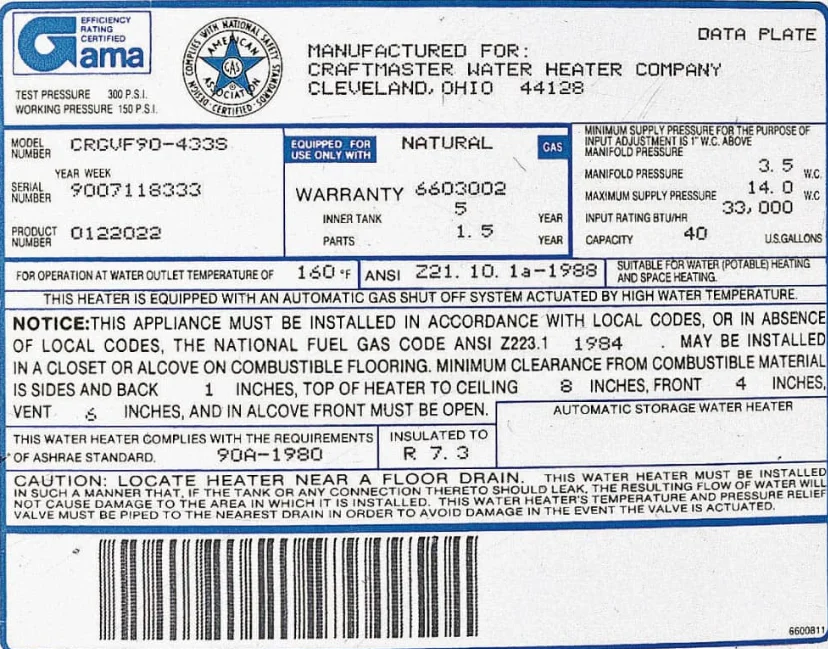
The nameplate on the side of a water heater lists tank capacity,insulation R-Value,and working pressure.More effiecent water heaters have an insulation R-value fo 7 or hight. the nameplate for an electric water heater includes the voltage and the wattage capacity of the heating elements and thermostats.New water heaters also have a yellow engergy guide lable that lists typical yearly operating costs.
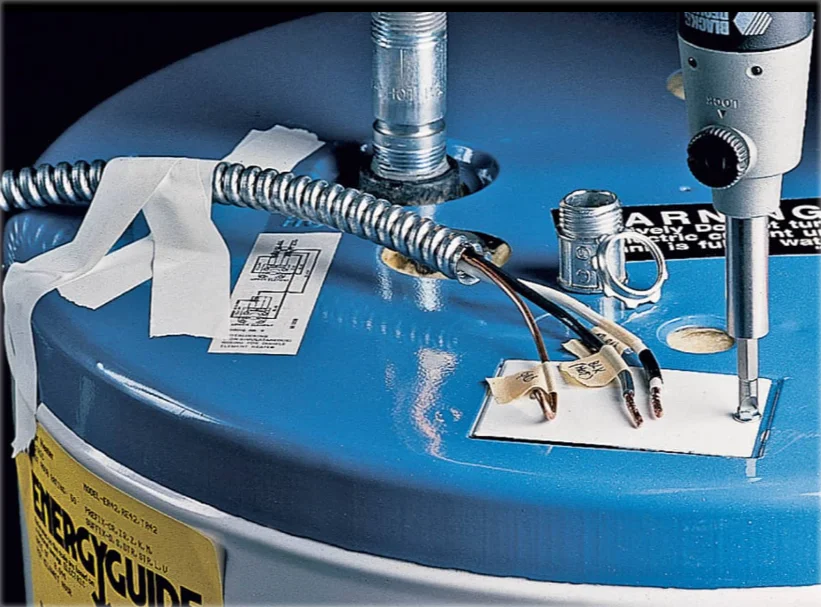
Use armored cable or wires housed in metal conduit to bring electrical power to electric water heaters .The armored cable or conduit should enter the top of the unit through a conduit clamp.
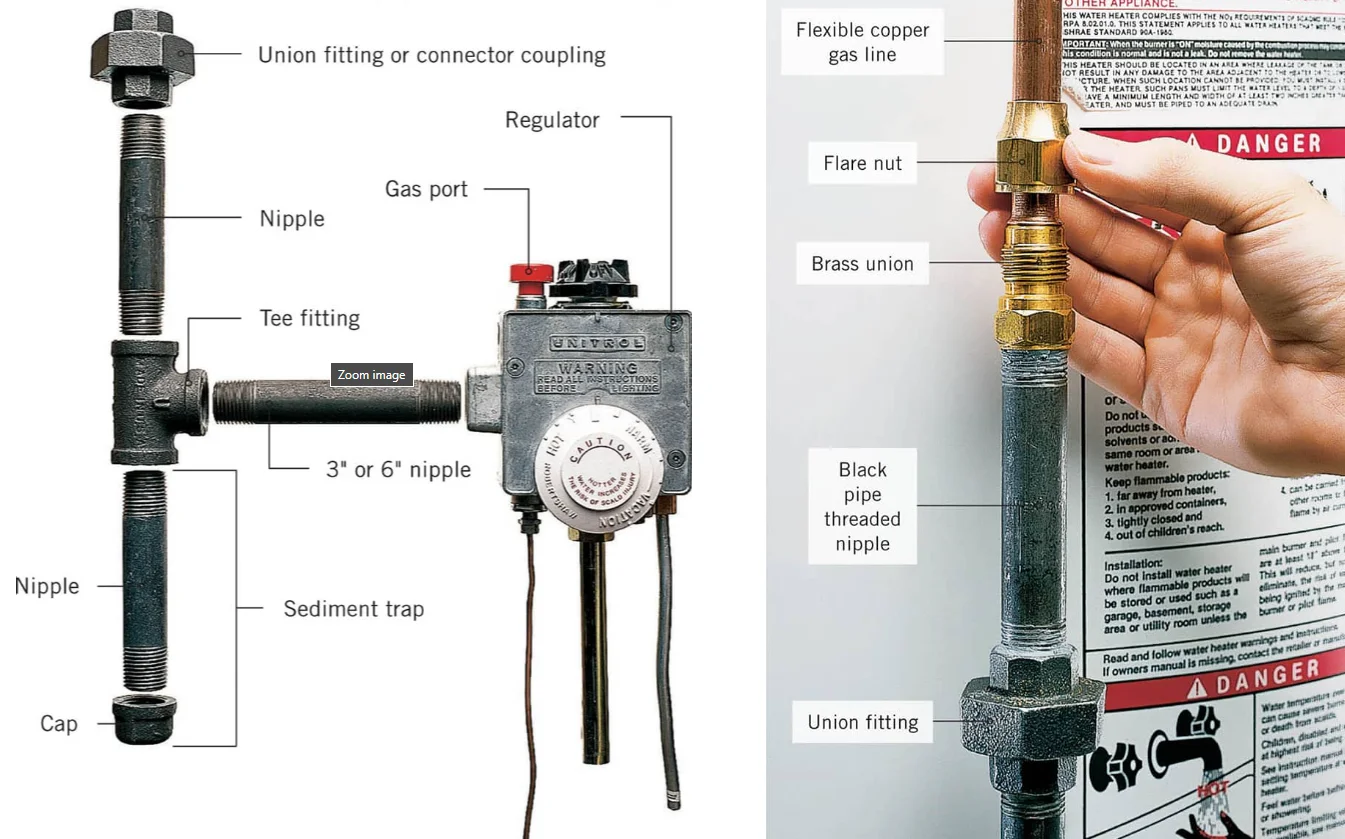
Install a sediment trap between the gascock and the gas port on your gas water heater. A sediment trap is simply a veritcal pippe nipple that is installed at the base of the union to allow any impurities in the fuel to collect rather than bening drawn into the combustion chamber through the port. In most cases it is easier to locate the sediment trap at the water heater connection point, not the gascock fitting on the supply pipe.
If your house has soft copper gas supply lines, use a flare fitting to connect an additional threaded nipple from the black pipe assembly that connects to the water heater regulator .If you have black pipe supply lines ,use a union fitting.
Gas water heater VS Electric Water Heater
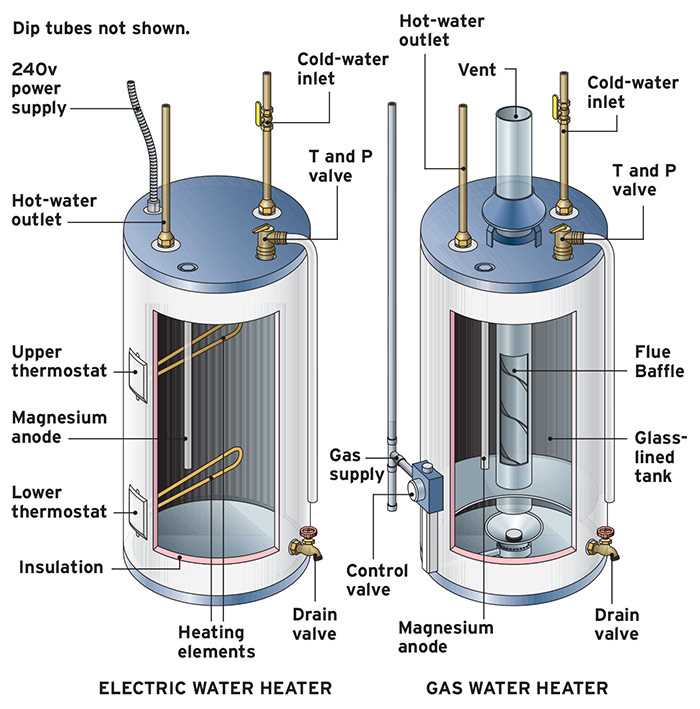
Gas water heaters operate on either propane or natural gas and are generally very economical to run. They do cost a bit more than electric heaters up front. The installation on the features a gas water heater.
Electric water heaters require 240-volt service, which might overland your service panel if you are replacing a gas heater with an electric model. Their primary advantages are that they are cheaper (but not to operate)to purchase and they do not require that you make gas connetions.