Plumbing - Drain and Flush a water Heater Tank
Draining and flushing a water heater is an important maintenance task that helps improve its efficiency and lifespan. Here are the steps to do it:
Steps to Drain and Flush a Water Heater
Turn Off the Power or Gas:
For electric heaters, turn off the power at the breaker box.
For gas heaters, turn the gas control valve to the "pilot" setting.
Turn Off the Water Supply:
Close the cold water supply valve to the heater.
Attach a Garden Hose:
Connect a garden hose to the drain valve at the bottom of the tank.
Run the hose to a floor drain, outside, or to a suitable drainage area.
Open the Drain Valve:
Carefully open the drain valve to let the water flow out of the tank.
Open a hot water tap nearby to help with draining and to relieve pressure.
Flush the Tank:
Once the tank is empty, turn on the cold water supply valve for a few minutes to flush out any remaining sediment.
Let the water run through the tank and out the hose until it runs clear.
Close the Drain Valve:
Close the drain valve and remove the garden hose.
Make sure the drain valve is tightly closed to prevent leaks.
Refill the Tank:
Open the cold water supply valve to refill the tank.
Open a nearby hot water tap to let air escape from the system until the water flows smoothly.
Turn On the Power or Gas:
For electric heaters, turn on the power at the breaker box.
For gas heaters, turn the gas control valve to the "on" position and light the pilot (if required).
Safety Tips
Safety First: Always prioritize safety. If you're not comfortable with any of these steps, it's best to consult a professional.
Proper Disposal: Ensure the water is drained to a safe location to avoid damage to your home or property.
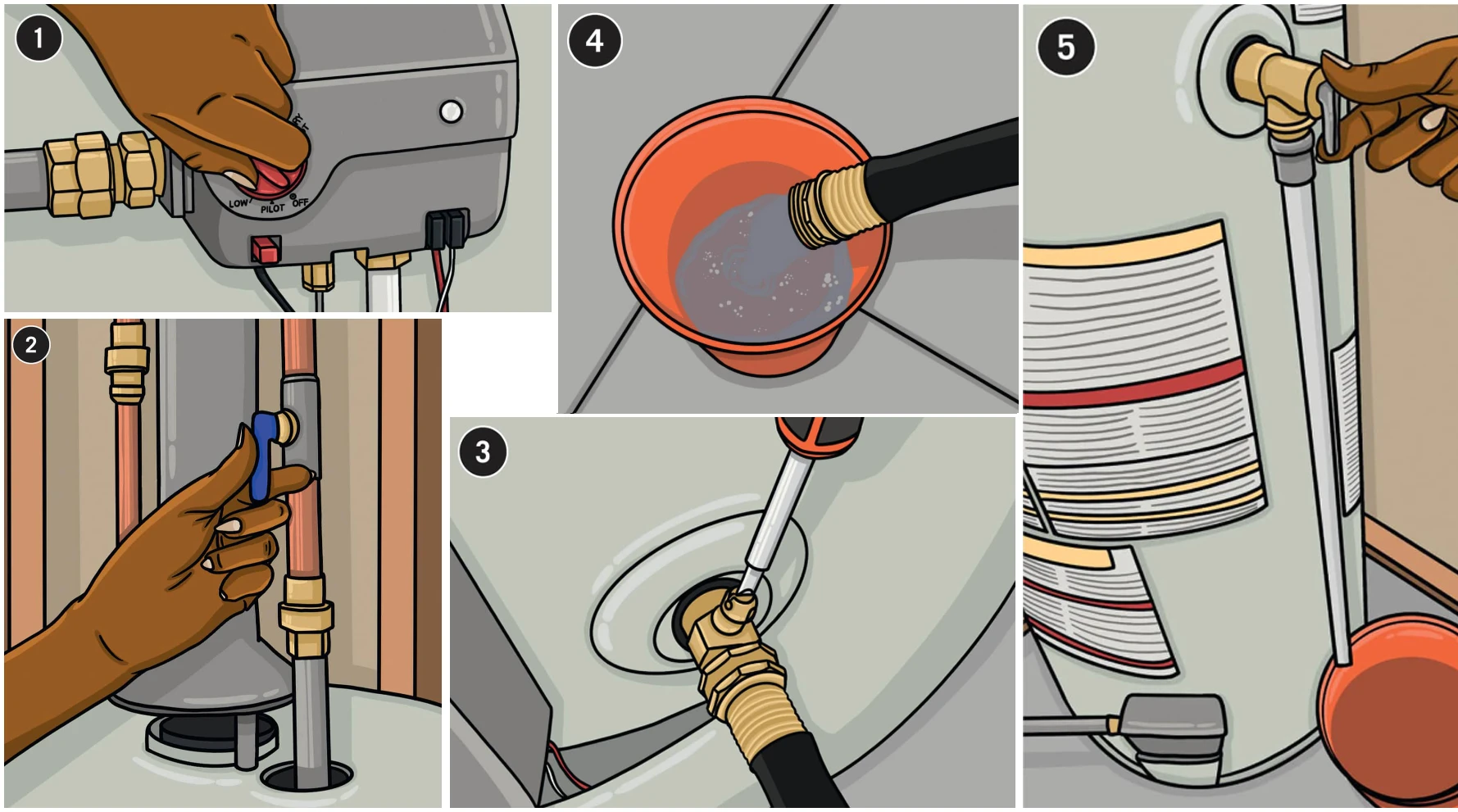 Home life of your water heater,and keep energy costs as low as possible, by reguarly flushing out the sediment that accoumulates in any water heater tank.
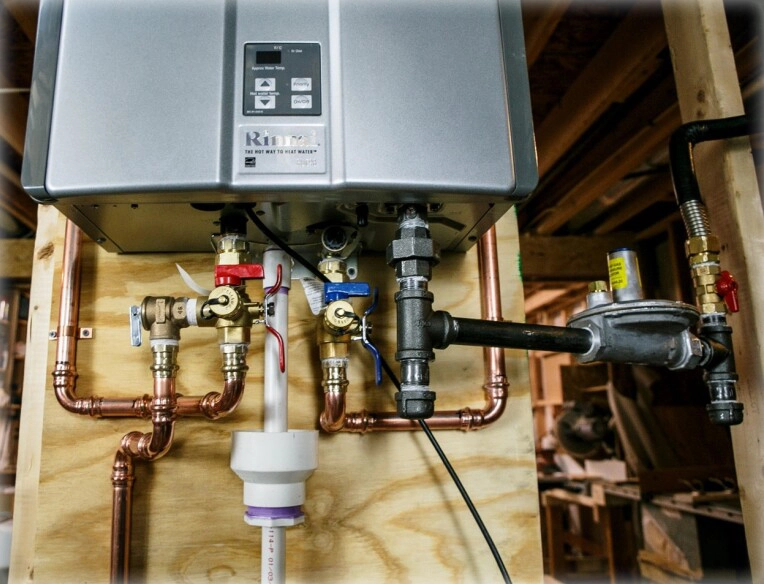
Turn off the water heater at the source. Flip the breaker for an electric heater, or shut off the gas for a gas water heater.
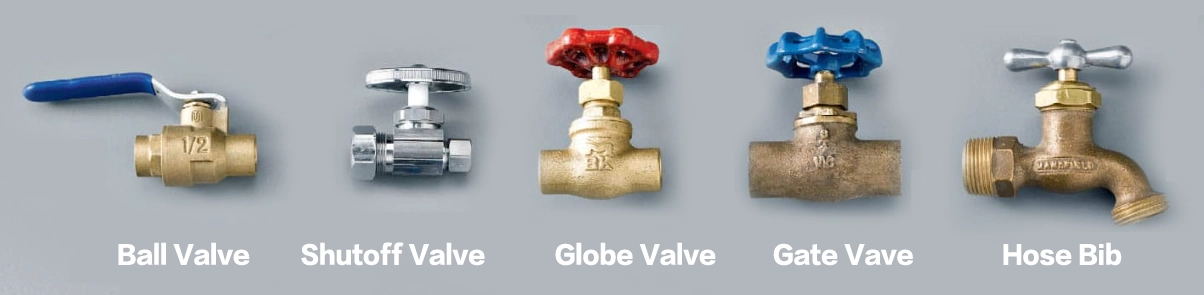
Turn off the cold-water supply at the shutoff valve for the line supplying the water heater. Connect one end of a garden hose to the drain bib at the base of the water heater. The hose should be snug enough not to leak, but not so tight that it will be difficult to get off or would damage the bib threads.
Turn on the hot water at any faucet in the house, to create air pressure that will drain the water heater. Use a screwdriver to open the drain bib valve by turning it about a quarter turn counterclockwise. If the water doesn't drain, you may have a backflow preventer valve in your system. In that case, release the T+P relief valve that is located on the side of the water heater, near the top.
Let the tank drain entirely. Drain the water directly into a waste line, either inside or outside. Once the heater is completely drained, open the cold water shutoff valve for about 30 seconds. Shut it off and let the water flush out sediment in the bottom of the tank. You should be able to see some in the water coming out of the hose. Repeat the flushing process several times, until no sediment flushes.
NOTE: To help detect sediment coming out the hose, drain the flush water into a clean, light-colored 5- gallon bucket.
Close the water heater's drain bib valve and remove the hose. Open the water supply valve and begin filling the water heater. Leave a faucet or the T + P relief valve open until the tank is halfway filled, then close the tap or valve. Turn the power or gas back on.