Plumbing - PEX Pipe Basic Introduce 01
This article will cover the basic concepts about PEX , Colors, Sizes ,Connector ,Dimension and some basic specifications.
PEX (cross-linked polyethylene) piping has revolutionized home plumbing with its flexibility, durability, and ease of installation. It's used for both hot and cold water supply lines, as well as for hydronic heating systems. Here are some key points about PEX piping in home plumbing:
Material: Made from cross-linked polyethylene, which makes it more durable and resistant to high temperatures and pressures compared to traditional plastic piping.
Flexibility: Can be bent and maneuvered around obstacles without the need for many fittings, reducing potential leak points.
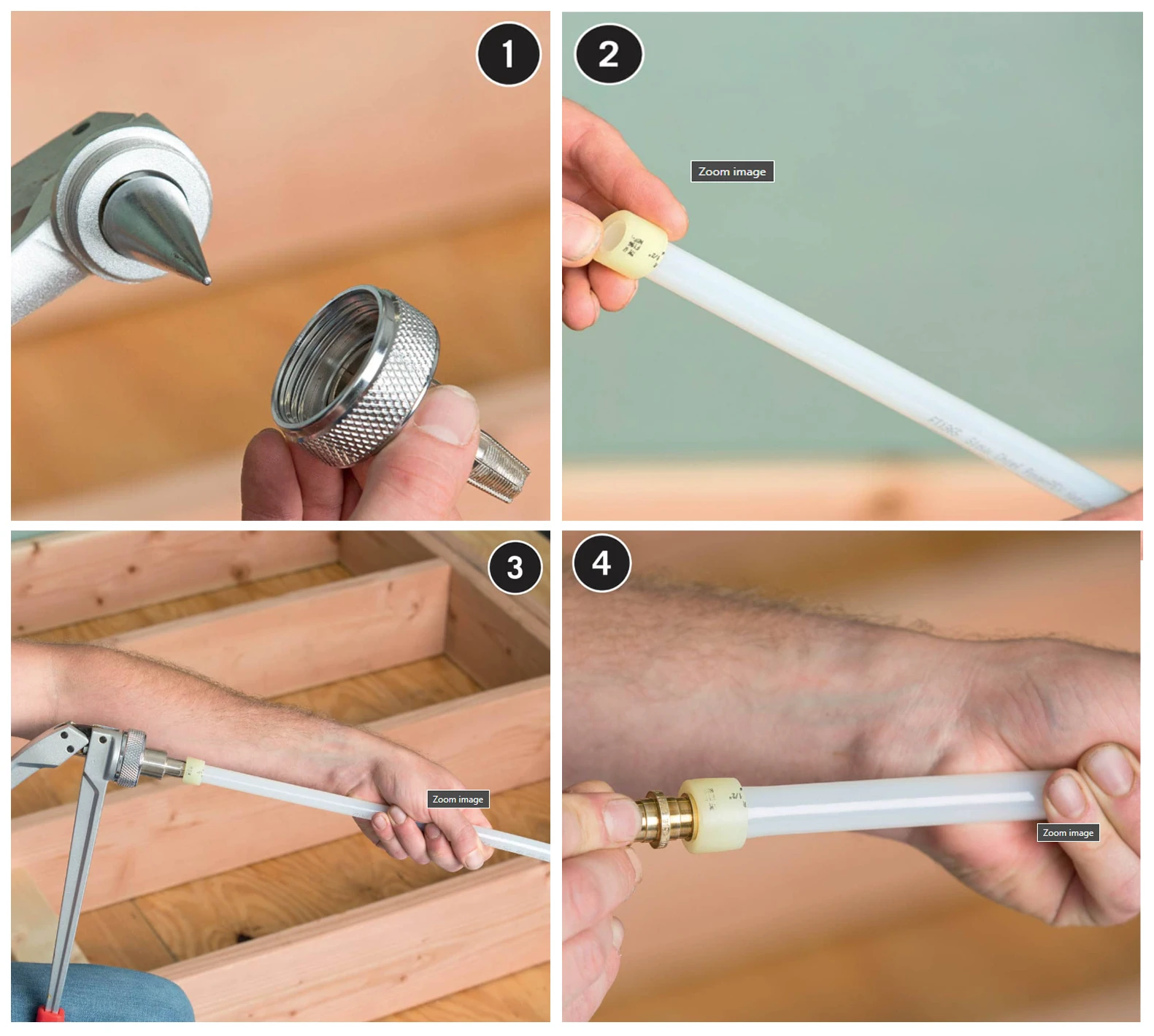
Installation: Easier to install than traditional copper or PVC pipes. It can be installed using crimp, clamp, or push-fit fittings, which speeds up the installation process.
Color Coding: Comes in different colors (blue for cold water, red for hot water, and white or gray for both) to help differentiate between hot and cold water lines.
Resistance: Highly resistant to scale and chlorine, which ensures longevity and maintains water quality.
Cost-Effective: Often more affordable than copper piping and requires fewer fittings and less labor for installation.
Expansion and Contraction: PEX can expand and contract, making it less prone to burst pipes during freezing conditions.
PEX Color
PEX pipes come in various colors, each indicating a specific use. Here's a quick guide to the color coding:
Blue: Used for cold water supply lines.
Red: Used for hot water supply lines.
White: Can be used for both hot and cold water supply lines.
Orange: Typically used for radiant or hydronic heating systems.
Gray: Similar to white, it can be used for both hot and cold water.
Home piple major use red ,white and blue color. The intention is to use red for hot water lines and blue for cold water, the color does not affect price,and you may decide to use one color for the entire project.
PEX Connector
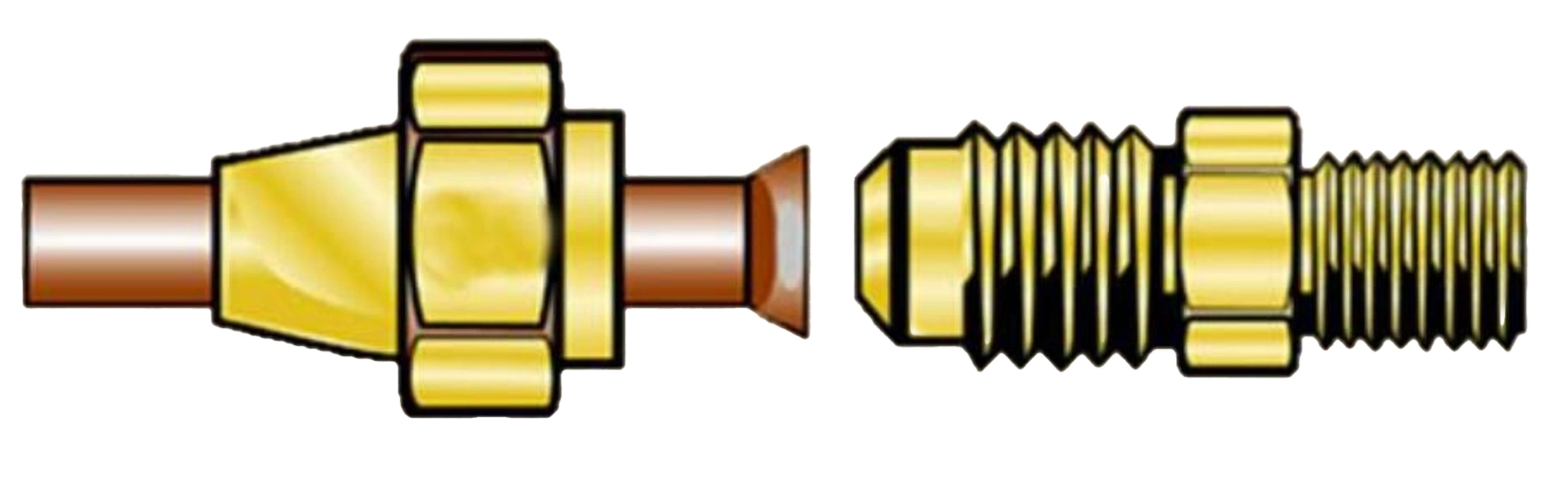
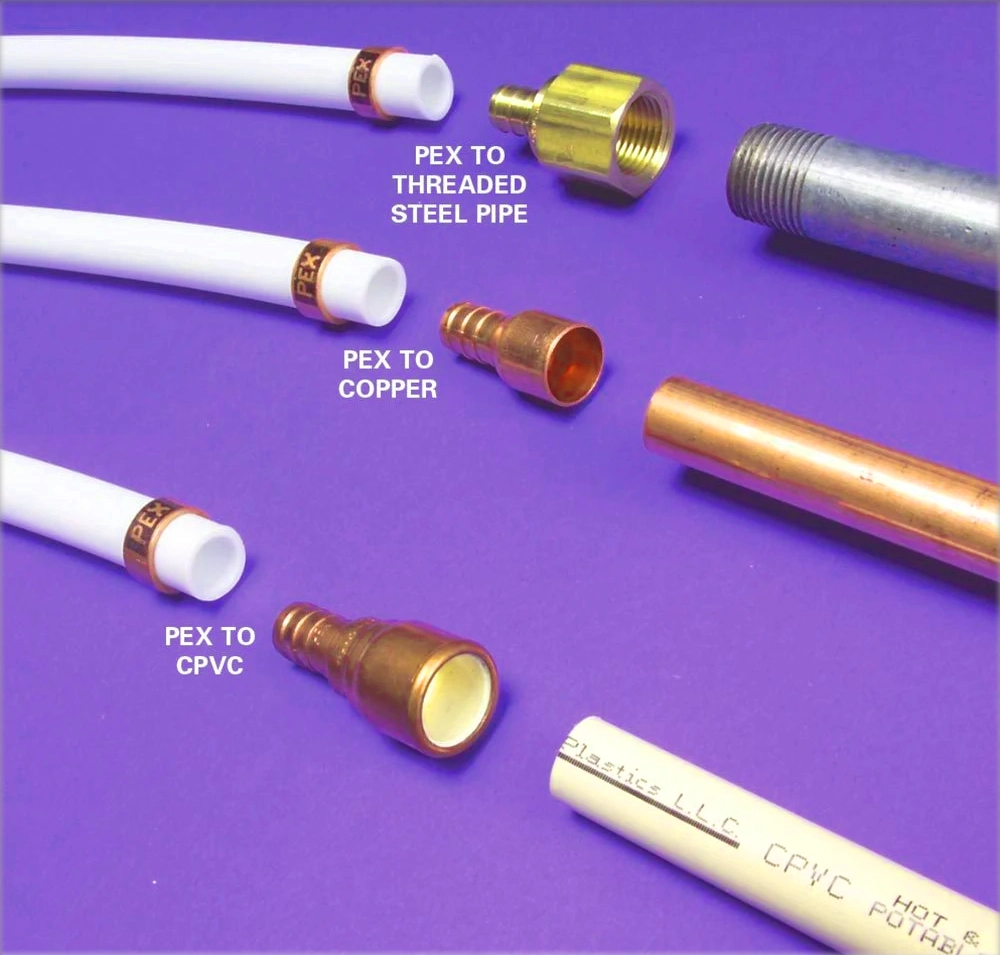
PEX combines the flexibility of plastic tubing with the durability of rigid supply pipe. It is sold in coils of common suuply pipe diameters.
PEX Dimension
PEX pipes come in various sizes, typically measured by their outer diameter (OD). Here are some common PEX pipe dimensions:
Nominal Size | Outer Dia. (OD) | Wall Thickness | Inner Dia. (ID) | Max. Pressure Rating |
|---|---|---|---|---|
| 1/4 | 0.375 | 0.07 | 0.235 | 160 |
| 3/8 | 0.5 | 0.07 | 0.36 | 160 |
| 1/2 | 0.625 | 0.07 | 0.485 | 160 |
| 5/8 | 0.75 | 0.083 | 0.584 | 160 |
| 3/4 | 0.875 | 0.097 | 0.681 | 160 |
| 1 | 1.125 | 0.125 | 0.875 | 160 |
| 1-1/4 | 1.375 | 0.15 | 1.075 | 160 |
| 1-1/2 | 1.625 | 0.175 | 1.275 | 160 |
| 2 | 2.125 | 0.215 | 1.695 | 160 |
PEX International Plumbing Code
General Codes for PEX ,PEX has been endorsed for residential use by all major building codes,although some municipal codes may be more restrictive.The specific design standards may also vary,but here are some general rules:
For PEX ,manimum horizontal support spacing is 32" (24 -32")and maximum Vertical support spacing is 10" (Gerneral selestion 6") .
PEX is designed to withstand 210℉(100℃)water for up to 48 hours. For ongoing use ,most PEX is rated for 180℉(82℃)water up to 100 pounds per square inch of pressure.
Directional changes of 90 degrees or more require a guide fitting.
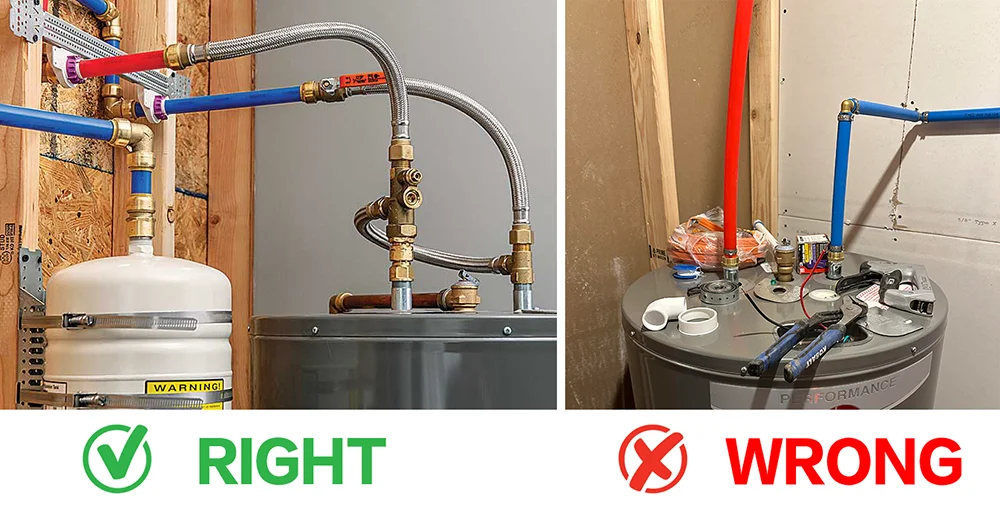
Don't attanch PEX directly to a water heater. Make connections at the heater with metalic tubing (either flexible water-heater connector tubing or rigid copper) at least 18"long, then join it to PEX with a transition fitting.